
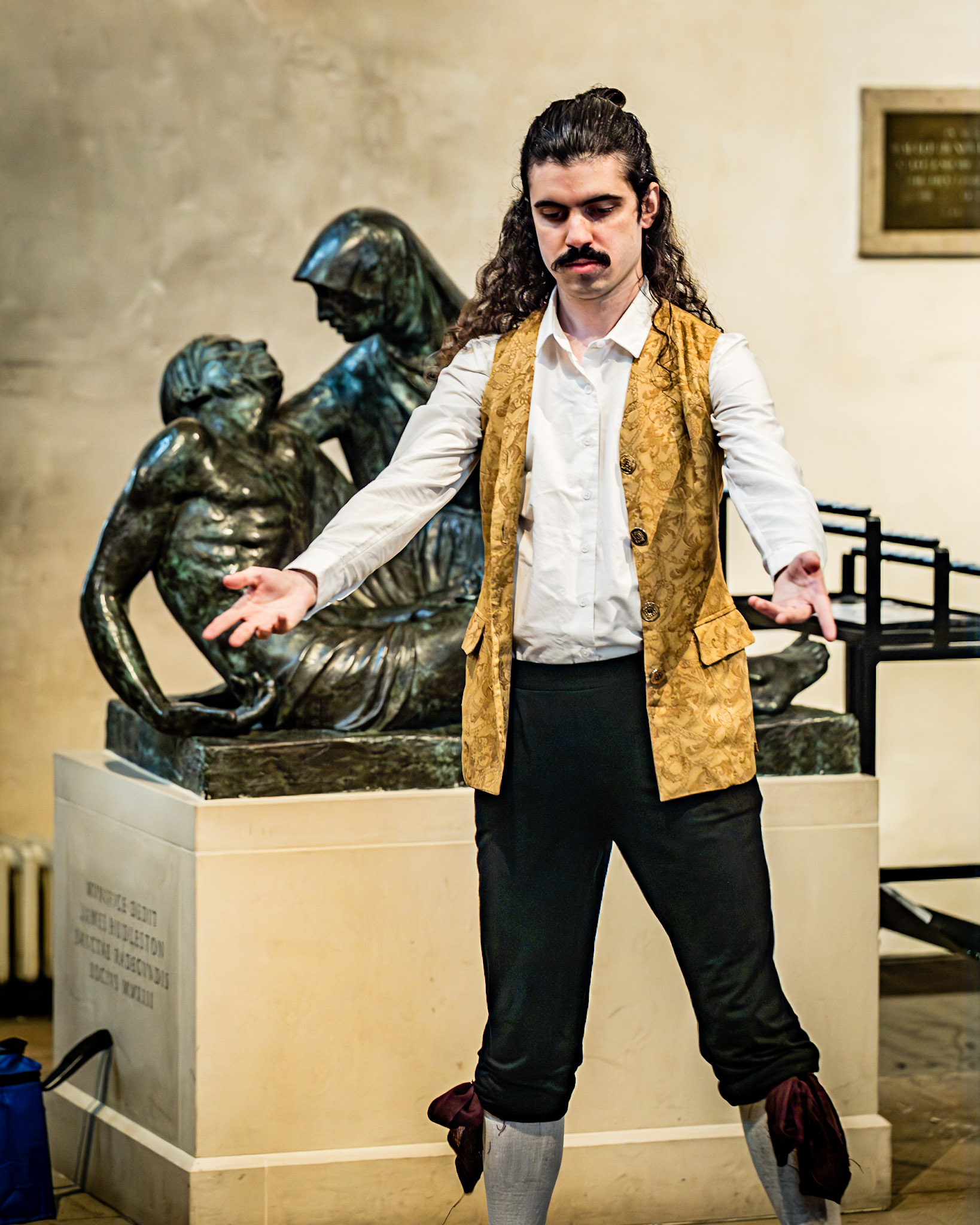
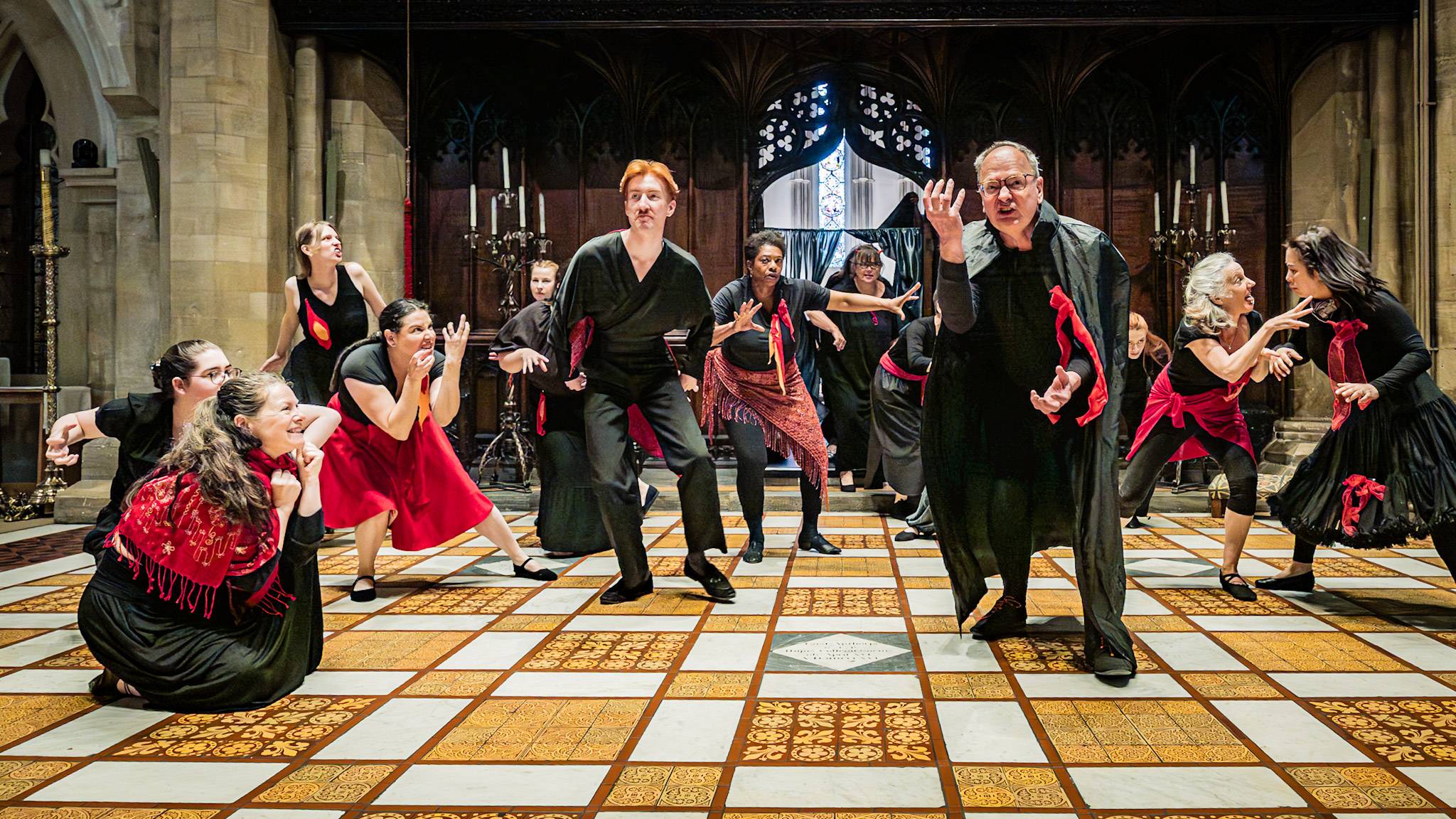
‘Bringing together music, dance, and acting, the stage became a space for imaginative crafting and for the unrestrained flow of multiple artistic languages, led by the unstoppable geniuses of Laurence Cummings and Mary Collins.’
‘The community we formed with the other participants helped me to overcome my language barriers
and fears. With my roommate and fellow cellists I became good friends, and we hope to meet and
play together again. The memories and lessons from this course are now an important part of my Baroque music journey.’
‘I feel like I have much more clarity about the next steps I should take for my career progression.’
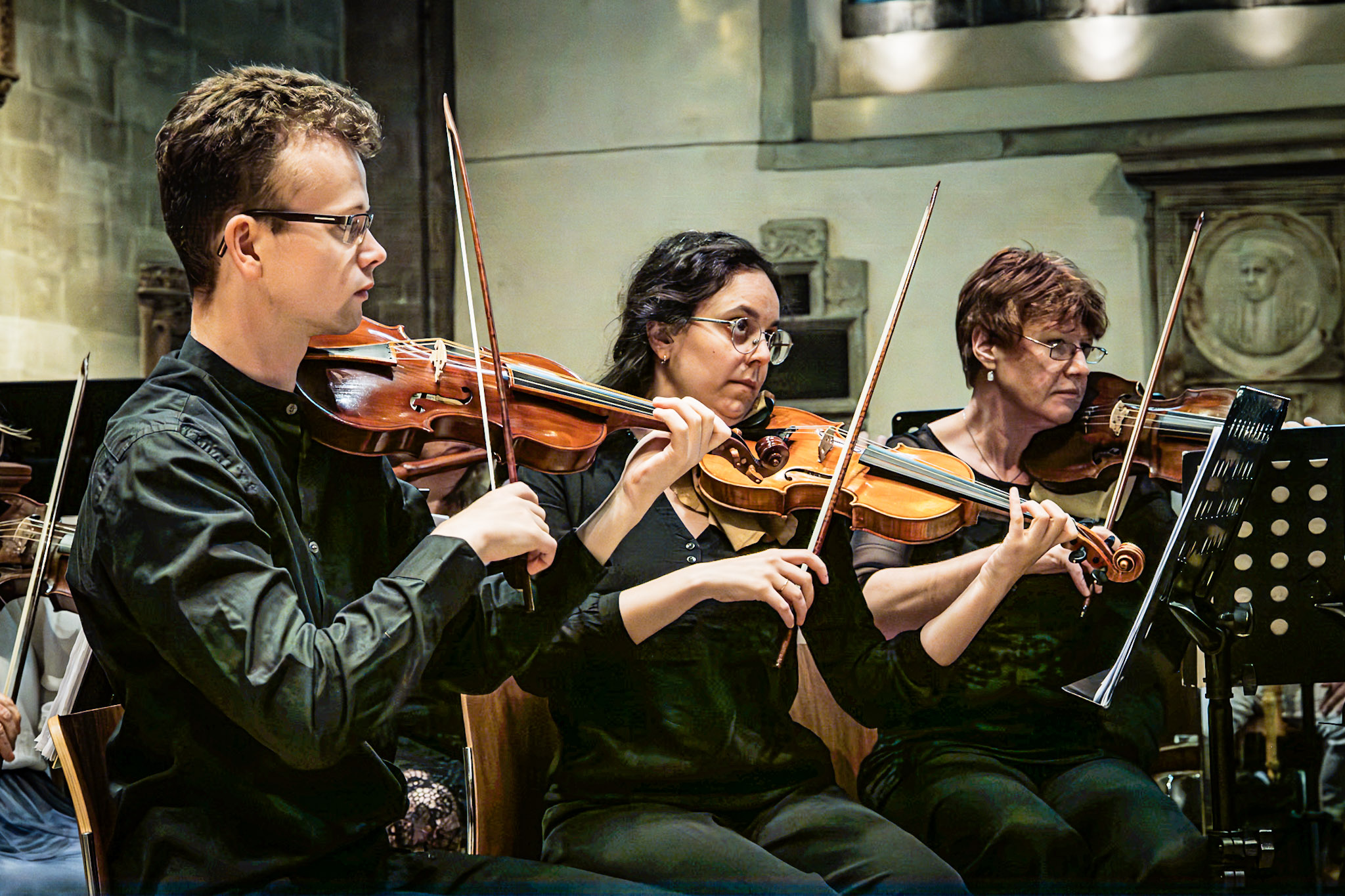
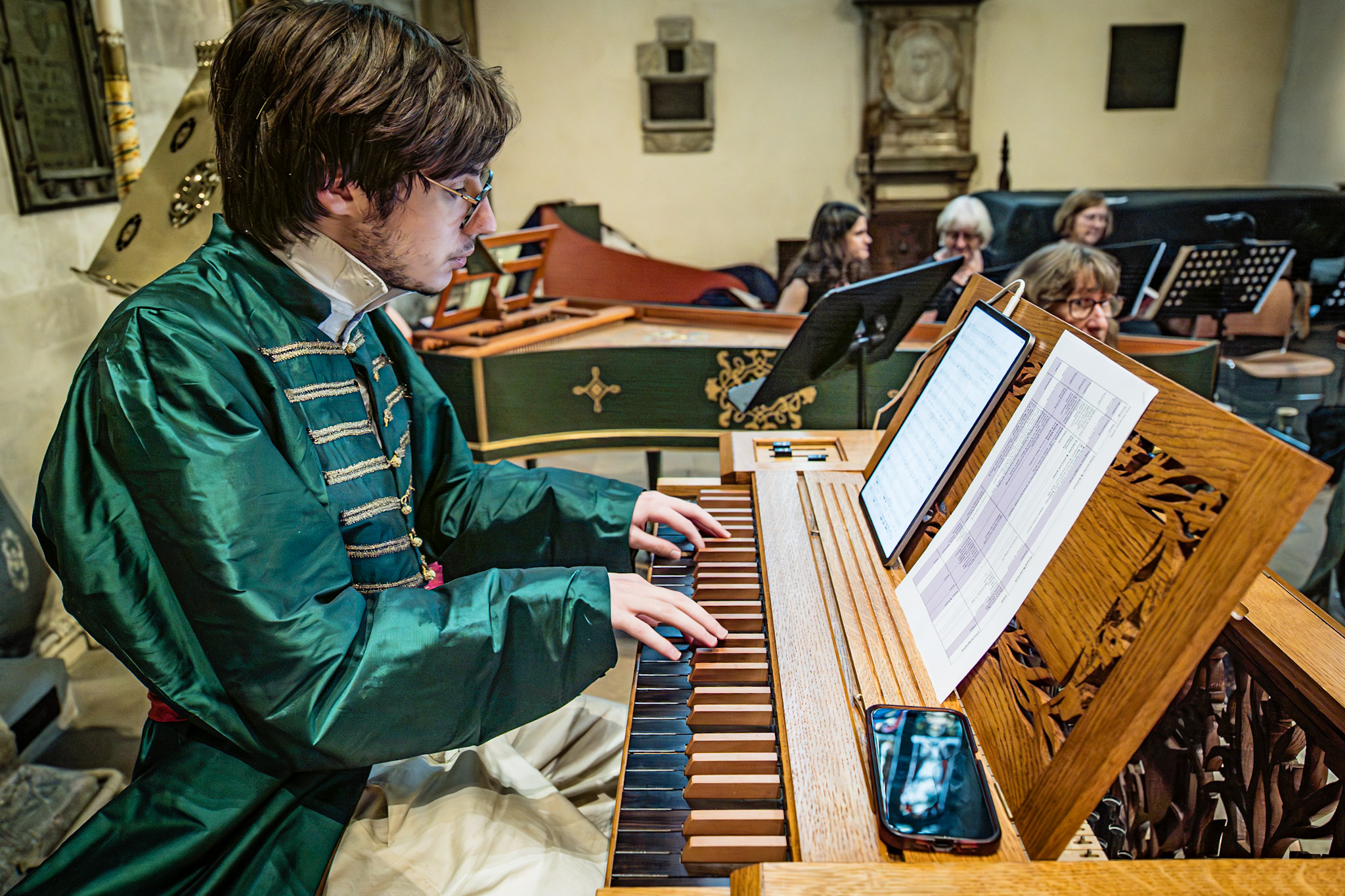
‘I gained significant experience in working in a larger ensemble setting as a continuo player, in particular working with other harpsichord players simultaneously – this is something I had no experience of at all, so learning the importance of consistency in our figuring and variety in each of our approaches was very valuable. I really valued getting to work with Laurence and Joe, who had brilliant feedback that was continuo-specific. I also really enjoyed getting to meet more Baroque musicians my age, and hear about the experiences of young musicians in the UK. The bursary gave me more flexibility in my funds and gave me the opportunity to attend and work with so many new friends in the early music world.‘
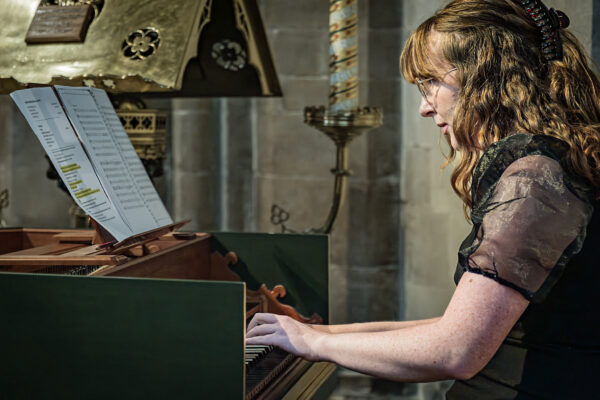
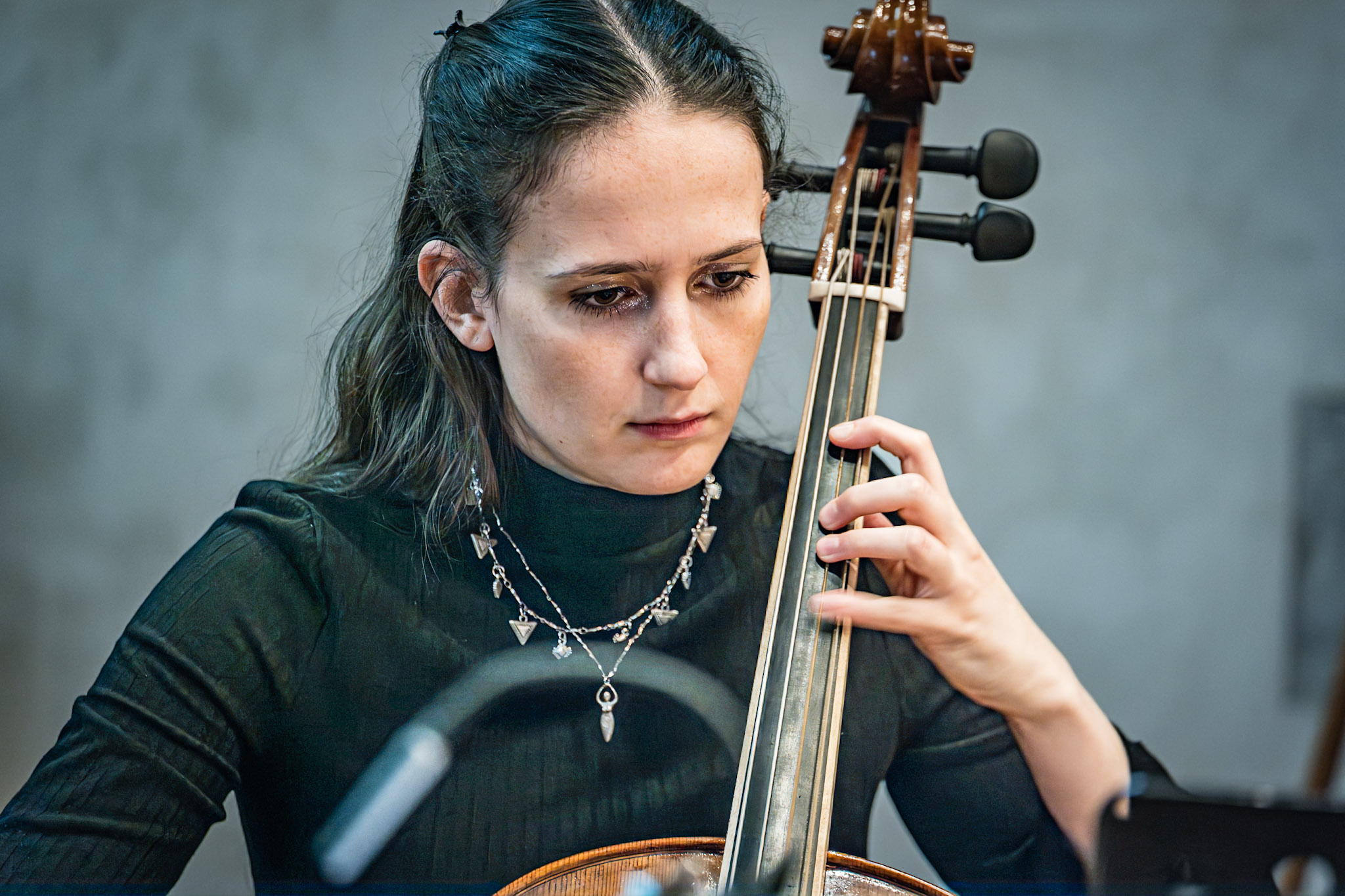
‘Perhaps the greatest experience was meeting others who are excited about early music, and possess such prowess that they are either currently on or embarking upon further study programs. Being able to keep up with such high-level performers in (casual) performance situations and relate with them socially was not only a fun opportunity, but also highly encouraging for my future trajectory.‘
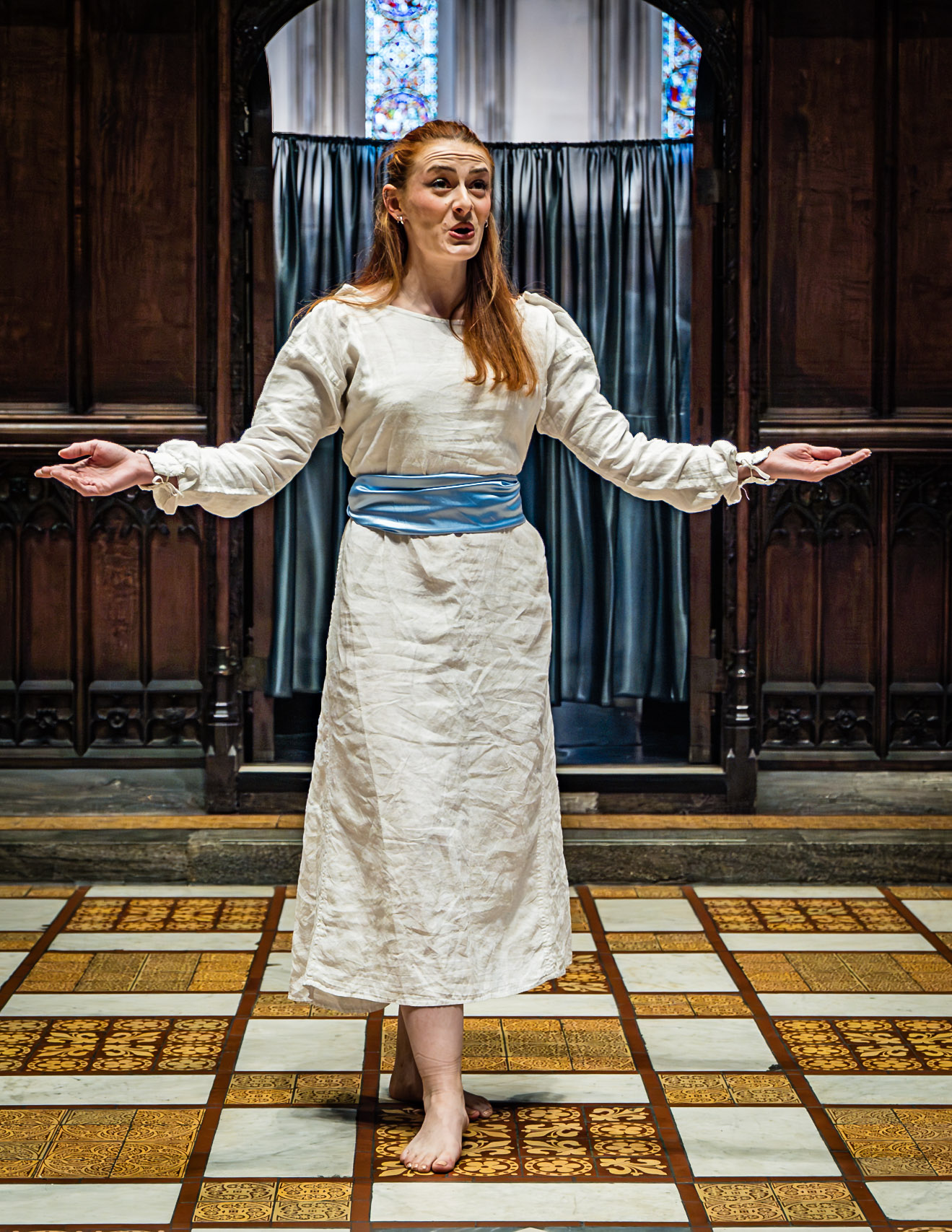
‘The friendly tutors skilfully suggested ways of meeting the challenges of interpretation and technique that the music presented, giving me food for thought that will long outlast the course itself.‘
Bursaries
The Selene Webb (née Mills) Memorial Bursary Fund supports those whose financial situation would prevent them from attending our courses without assistance, particularly music and dance students and those setting out on a career in music. Since its foundation, we have been able to support dozens of young musicians, with great success, as our student testimonials below attest. To find out more about the fund and how you might support it, click here.
Our funds are necessarily limited and dependent upon donations from benefactors. Only rarely are we able to cover the full course fees, so applicants should be prepared, if possible, to pay some or most of the cost themselves. Applicants are encouraged to seek help from their local authorities, schools, colleges and sponsors, and to undertake fund-raising activities such as giving concerts.
To apply (in confidence) for financial help, complete and submit the application form for the Summer Schools. By the time decisions are made on bursary applications, spaces for non-bursary applicants might not be available. Therefore, we encourage you to apply for a bursary ONLY if you cannot find funds elsewhere to avoid disappointment.
Please read the guidelines on how to apply for a bursary before sending the form. A copy of your responses will be sent to you via email. Please keep it for your records.
Please note that the Early Dance Circle also offers bursaries to dance students and viol players can apply to bursaries offered by the Viola da Gamba Society in the UK.
What our Bursary students say…
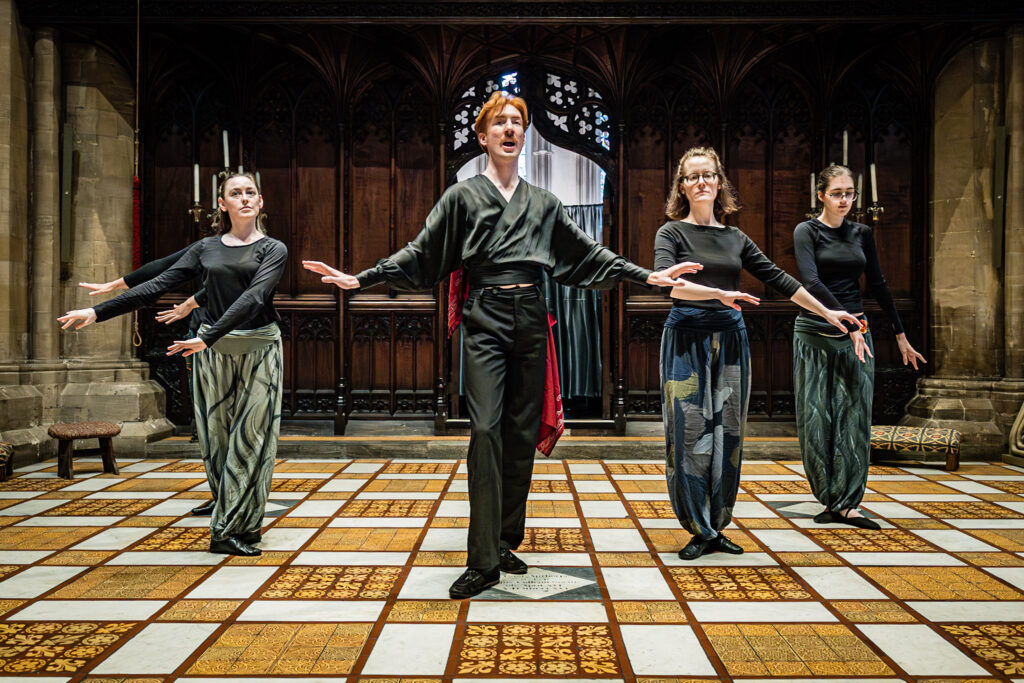
Oliver Barker, baritone (Baroque SS 2025) (…) There is something incredibly special about the Cambridge Early Music Summer School, and this can be attributed to many things. There’s the location, the staff, the care, the programming and especially the people. Being a young professional musician, it isn’t often I work on projects so widely ranging with people’s experience levels, backgrounds and goals. What this creates is a wonderful mixing pot to learn, experiment and play free from judgment. My particular favourite feature of the course was the evening informal concerts – it was so special to see people so genuinely enjoying their playing, and the opportunity to share this with their new peers. I felt incredibly looked after by everyone, and this was particularly important considering how full-on the schedule became at times. No question was ever too big or small, and this really is a credit to the course as a whole. (…)
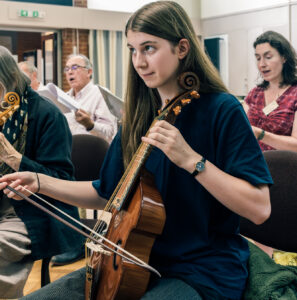
Mari MacGregor, Viol (Renaissance SS 2023) (…) Throughout the course we sight-read so much good music – most of which I’d never come across before – that drastically improved my sight-reading. I also tried out other sizes of viol which helped me gain proficiency and confidence on theses different sizes as it was a really encouraging atmosphere. We also had a session on division playing (embellishing your part according to the styles of the time) which has encouraged me to study division playing further.(…) Forming chamber groups with many different people was a standout for me, which was only possible due to how flexible the schedule was. We had a good amount of free time throughout the week which allowed for groups to be formed organically to prepare for performances in the evenings. (…)
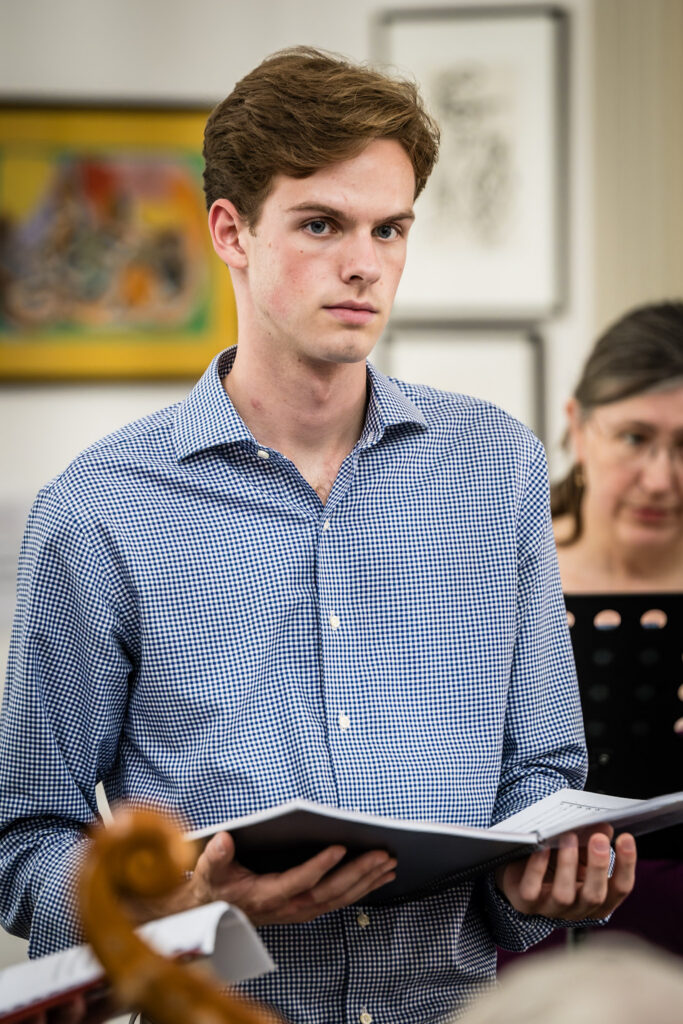
Camden Oberg, baritone (Renaissance SS 2024) (…) Throughout the course, Clare ensured that practical musical components were always complemented by educational ones as well. By the close of the week, I had developed not only as a singer of Renaissance music, but as a scholar of its cultural history as well. I became more flexible in responding to input from other singers and more welcoming of different perspectives. It is these people who, far beyond the music we sang, shaped my experience at the CEM Renaissance Summer School. Some of my most memorable moments were those shared with others. Clare’s immeasurable effort to organize, design, and lead the course and the tutors’ dedication to our constant improvement ensured that each and every session was productive. It was enormously rewarding and wonderfully humbling to spend the week singing Renaissance polyphony with such a brilliant group of people. (…)