
Ahead of their Villages Tour (A Renaissance Journey), The Clerks and L’Isola gave us some background insights into the three programmes – and how they are preparing for the demands of a long day of concerts.
How do the three concerts take us on a ‘Renaissance Journey’?
These three programmes begin and end at similar points – John Dunstaple and William Byrd. They take parallel journeys, visiting some repertories which may be familiar, others which certainly will not. Each journey has sections of chant and song, which are intended to complement the following polyphonic pieces. As musicians today, we tend to focus on polyphonic music – whereas for musicians living through the Renaissance, chant was far more important. The relationship between chant and polyphony was the reverse, with the chant as the dominant repertoire. Placing the polyphony in its musical context is a journey for us as performers – there are numerous ways to approach this repertoire and it’s exciting to present our take to an audience.
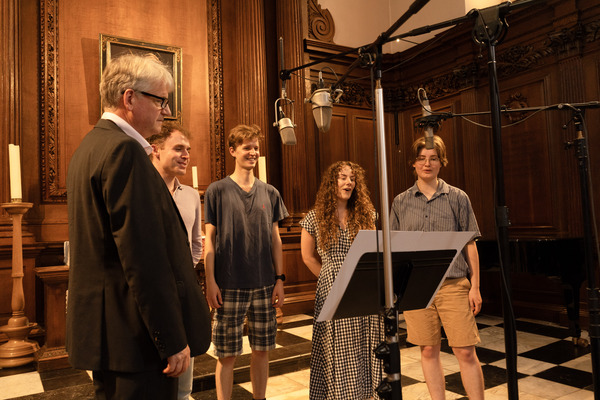
Which piece in the Cambridge Villages Tour repertoire is your personal favourite and why?
I particularly enjoy both Ingemuit Susanna by Alfonso Ferrabosco and Se’l breve suon by Filippo de Monte. Both show the composer using all of their craft; although this is music designed to be heard and enjoyed by listeners, it was often the compositional nuance itself which was most appreciated at the time. De Monte and Ferrabosco are two of the finest composers of the period, and you see them showcasing their skills within these pieces. It is nice to be able to look at music contrapuntally with a discerning eye – diversity of compositional output really is a rarity in this period and should continue to be held in the highest esteem.
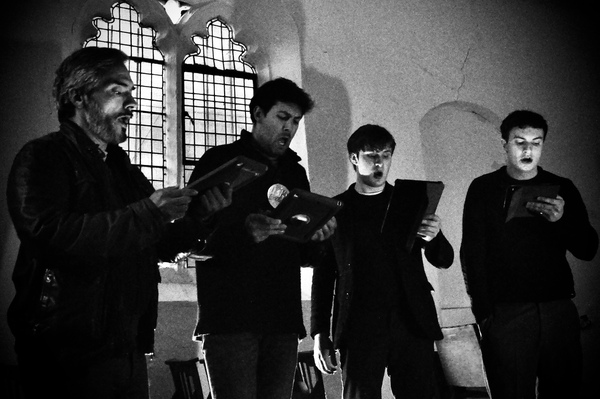
What are some key elements of the music that the audience can listen out for?
Notice the striking, sometimes angular-sounding moments of harmony in the early English repertoire; Dunstaple, Power and Byttering. It will contrast with, and be a compliment to, the later, smoother ‘counterpoint’ of Josquin and Byrd.
What aspects of ‘A Renaissance Journey’ are you most looking forward to and why?
I find collaborative projects to be some of the most enjoyable, and this project with the Clerks will be gratifying on many fronts. Being able to combine repertoire in single concerts is not easy programmatically, and it is always special to integrate both polyphony and chant, as this allows our audience to experience a variety of different senses and emotions. I am also thrilled that we are able to present some of our finest talent from within the university during this concert. Opportunities like this do not come up often, and it’s fabulous that Edward and I can continue to fly the flag for Early Music through these wonderful young musicians.
What will be challenging about performing three concerts in one day?
Stamina. I’m already practicing to get my voice in good shape. It will also be a test of teamwork; we have to trust each other to perform well, encourage each other, and keep our spirits up.
What first drew you to performing Renaissance music?
Renaissance music defied my expectations about singing, especially ensemble singing; it wasn’t necessarily about making a “beautiful” sound. And I found that very refreshing. For me, Renaissance music is about rhythm and direction: driven by the pulse together and making sense of a line, not just singing each note nicely. Curiosity is also integral to Renaissance music, looking at the manuscripts and prints closely, trying new ideas, and asking the question that we’ll never truly know the answer to: What did this music sound like?