This page will be updated with details of the 2027 course in October 2026.
Part of our Summer Schools programme, this week will be the perfect opportunity to spend time with like-minded musicians, and to develop your skills under the guidance of a world-class team of tutors: course director and vocal tutor Clare Wilkinson, vocal tutors Carys Lane, Giles Underwood and Nicholas Hurndall Smith, and viol tutors Alison Crum and Alison Kinder. Clare offers a warm and personal approach, aiming to provide an experience as close to tailor-made as possible for participants.
The voice of my beloved
The Song of Songs: sacred love songs by Palestrina, Lassus, L’Héritier, Gombert and others
The Song of Songs, or Song of Solomon, stands out in the Bible as a detailed expression of erotic love and physical passion. It is a lyrical but fragmentary drama; there is a female lover, ‘black and comely’, and a male lover, ‘white and ruddy’. They move from city to bedchamber, walled garden to mountainside; seeking, meeting, seeking again.
The fathers of the Christian church, perturbed by its voluptuous charge, sought holy – wholesome – meaning in its verses; Renaissance composers, perhaps (on the contrary) actively seeking out voluptuousness, were evidently drawn to the book. Many singers now would name their favourite pieces amongst the hundreds of resulting motets.
We will immerse ourselves in the Song’s dream-like, visionary atmosphere, taking Palestrina’s settings as a starting point. These form a set of twenty-nine, an unparalleled number among his contemporaries – what significance did this extraordinary text have for him?
Composers’ enthusiasm for the Song means we have a very rich repertoire to select from; as well as the Palestrina, there are settings by Lassus, L’Héritier, Gombert, Leonora d’Este, de Monte, Clemens, Gallus, Isaac, Le Jeune…
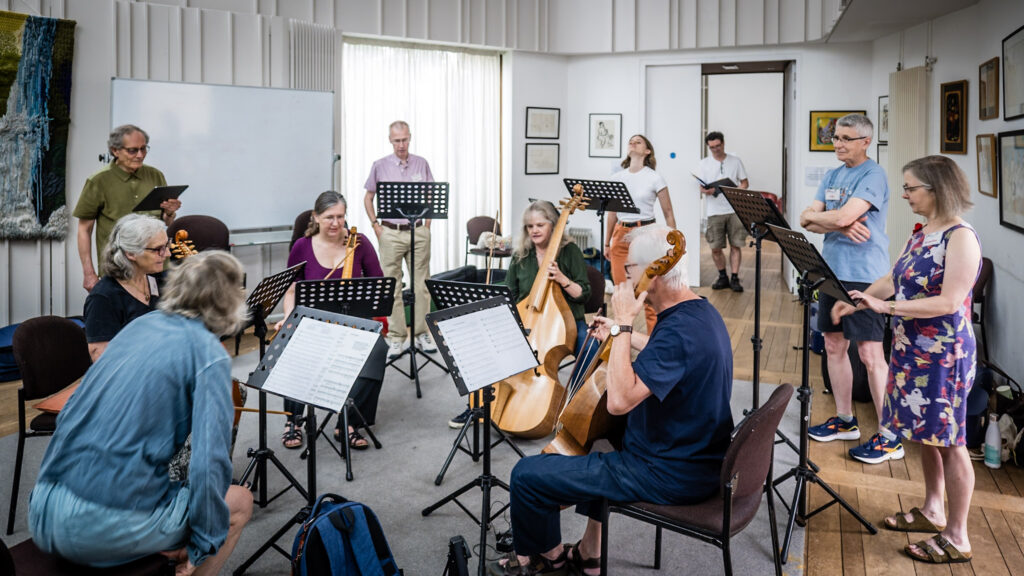
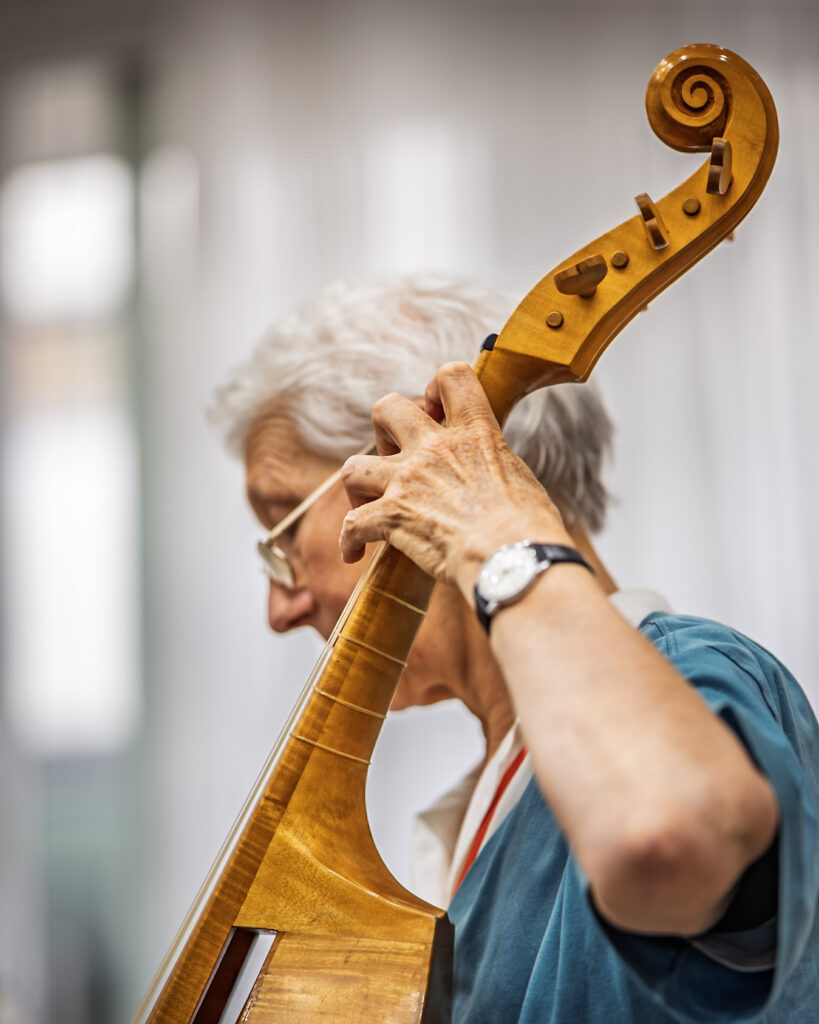
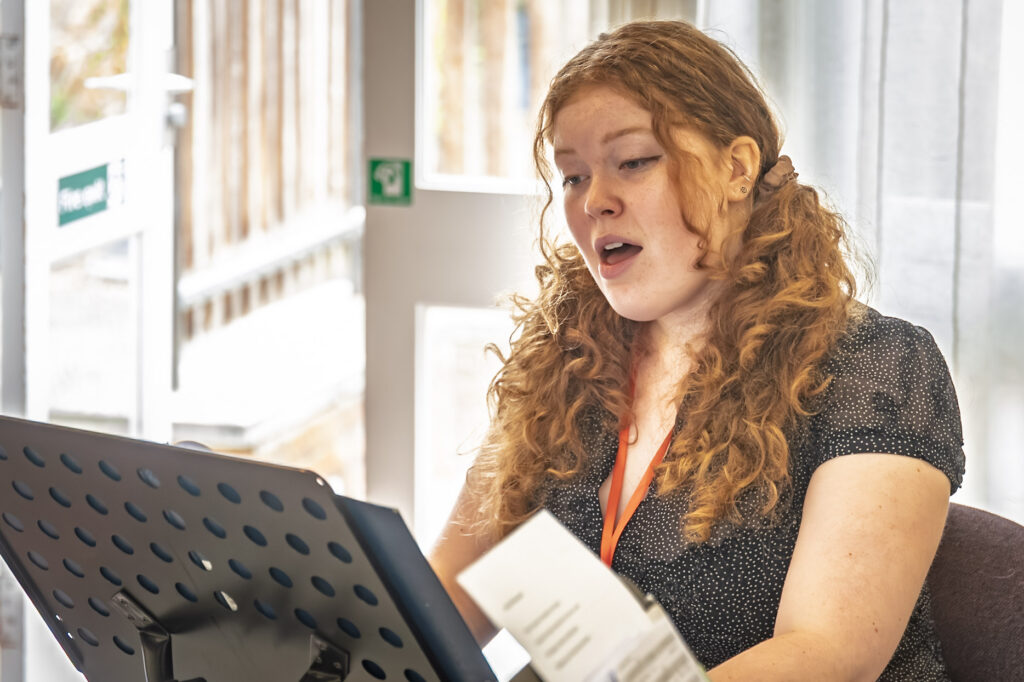
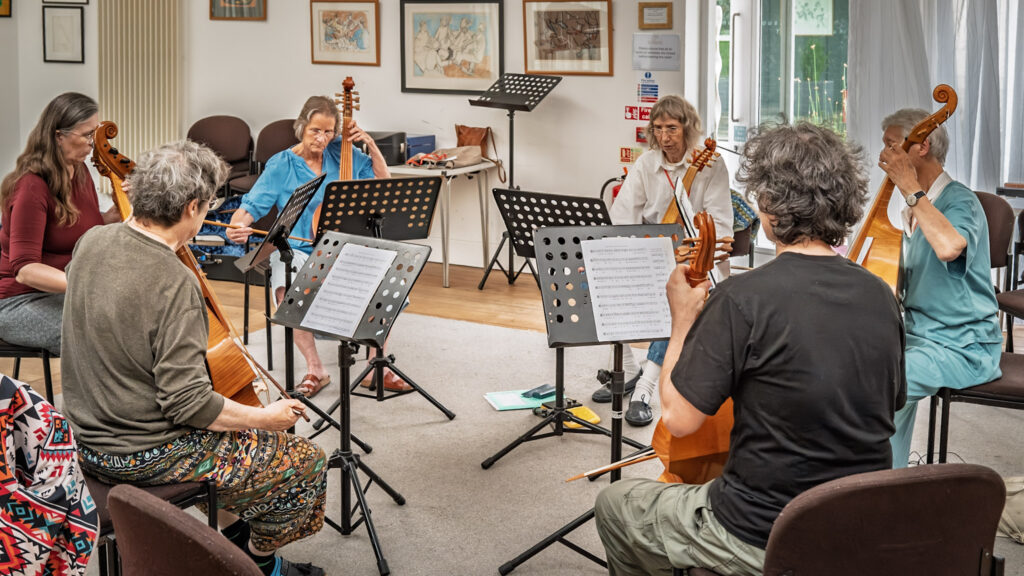
This unique course is custom-made for small consorts of voices or viols (ideally pre-formed by participants). Repertoire will be personally selected and adapted for your group by Clare Wilkinson, in consultation with a team of internationally renowned tutors. The emphasis is on friendly, collaborative music-making at a high level.
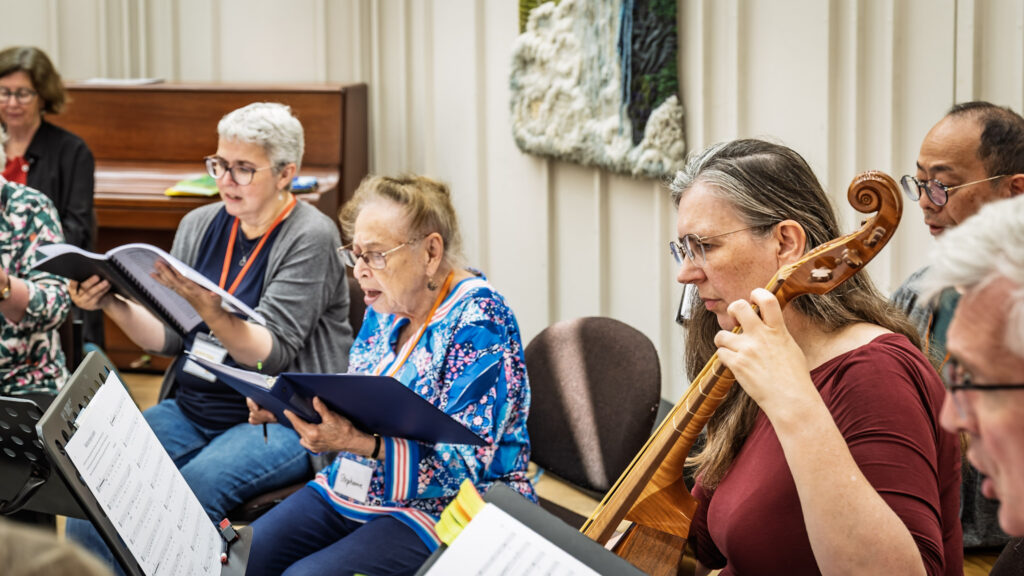
Two sessions each day will be spent with your ‘home consort’. In addition, there will be mixed sessions where singers and players combine in different ways, and various workshops, talks and larger-scale pieces.
Instead of working towards a concert, we will perform for each other informally in ‘musical gatherings’ over the course of the week.
A typical day’s schedule might be:
- 09.00 Optional warm-up
- 09.30 Session 1: Home consort groups
- 11.00 Coffee
- 11.30 Session 2: Home consort groups
- 13.00 Lunch, followed by free time (informal music if you wish; or or snap up a space in our ‘voice clinics’!)
- 15.00 Session 3: a talk, workshop or larger-scale piece
- 16.00 Tea
- 16.15 Our popular ‘After-tea talks’, given by participants who wish to share a passion
- 17.00 Session 4: Mixed consort groups
- 18.30 Dinner
- 20.00 ‘Musical gathering’
- Afterwards: Informal music as you wish; Benslow’s bar is open!
This example timetable is subject to change.
Music will largely be provided one month before the course in pdf form, via Dropbox, and participants will need to print this at home to bring, or read from their iPads. Repertoire may be supplemented during the course week. Do bring your own music for free time if you wish. Pitch will be A=440.
Arrival and departure times: Participants should arrive in time for tea at 4pm on Sunday 19 July; the first session will start at 5pm. The course ends with breakfast on Sunday 26 July.
Is the Renaissance course for me?
The course is intended for experienced singers and viol players who are confidently able to hold a line alone. As far as we know, this is the only consort-singing course in the country.
Tutors will create a comfortable environment so that you are relaxed enough to be at your best. Music will largely be provided one month before the course in pdf form, so you can get familiar with almost everything in advance. Participants are often surprised by how high the standard is: you will need either to be an excellent sight-reader, or take time to look at the music beforehand.
For viol players, this is a fantastic opportunity to learn about an earlier style of viol playing from two leading experts, and to explore the rich repertoire composed with this sound in mind. This course is for confident, rhythmically secure players of Renaissance viols, with plenty of opportunity to explore wider repertoire outside of the course material. A small number of instruments may be available to borrow.
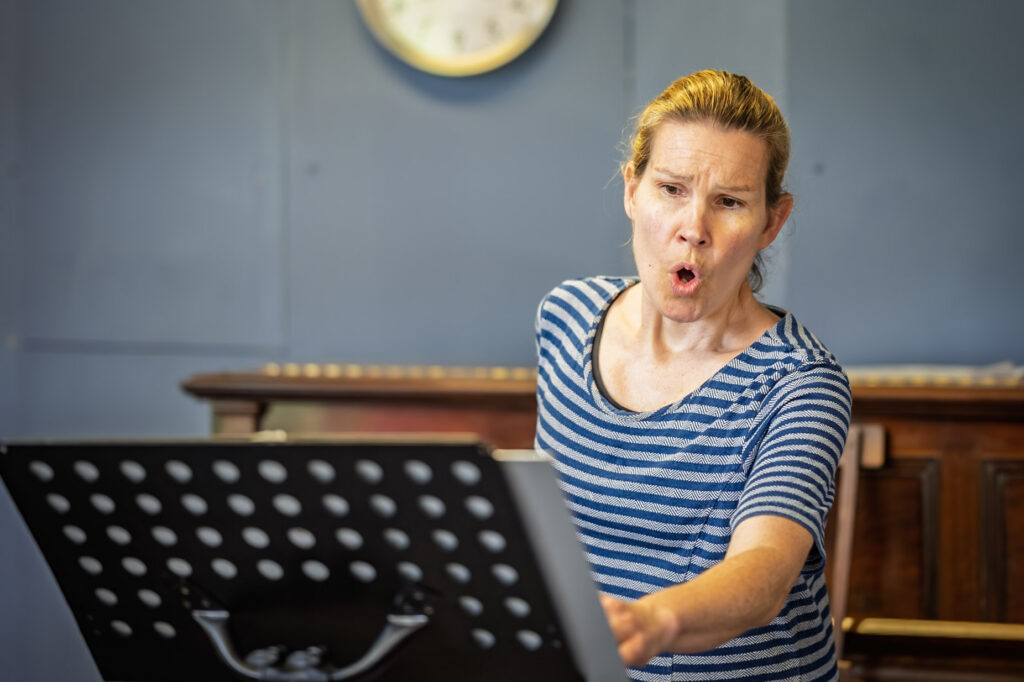
For singers, this is a small-scale consort singing course, where everyone is expected to take a lead. We strongly encourage you to pre-form your own ‘home consort’ with singers you know; pre-formed groups will be given precedence in the applications. For individual applicants, Clare will consider how best to combine applicants. Her aim is to form one-per-part consorts of singers where possible; however, the top priority is making well-matched groups. This depends on a candid appraisal of your own abilities: please sing through the sight-reading extract in the application form and be scrupulously honest about how well you manage. Being realistic about your standard – in terms of both sight-reading and sound – will result in more satisfying music-making for everyone! If you prefer to share a line, we will aim to pair you with another singer but also give you opportunities to try out holding your own line.
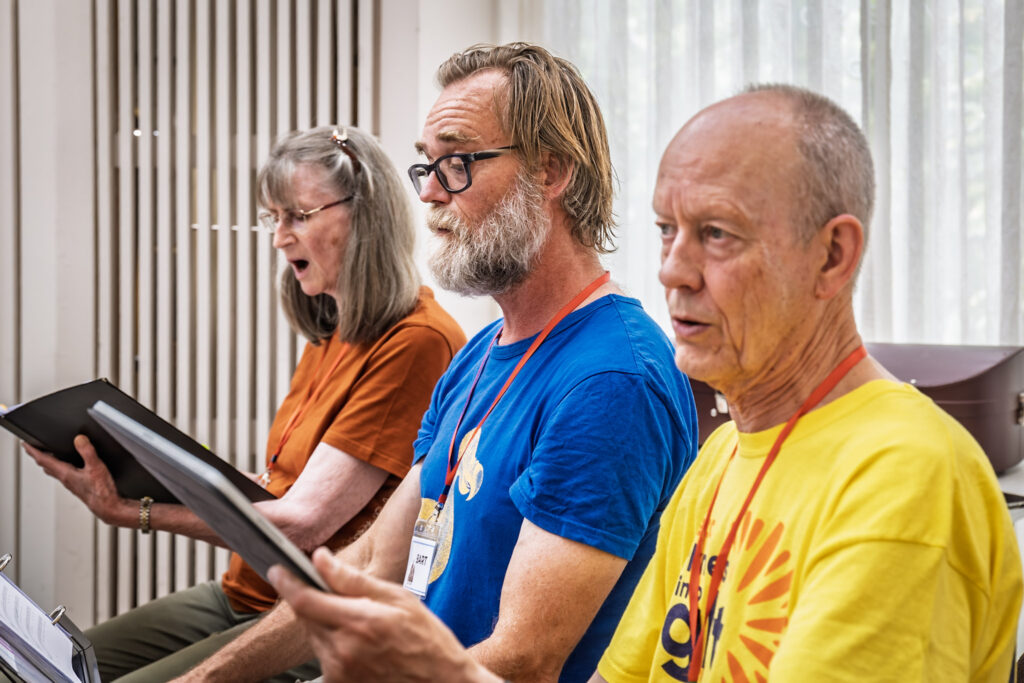
After applications have closed, the consorts will be finalised with a view to ensuring the right balance of voices and instruments. At the tutors’ discretion, combinations of singers that were not pre-formed may be changed during the week.
Consorts will be expected to work autonomously, as well as under the direction of our tutors, and we will help you build the skills to do this. There will be a focus on being a good chamber musician and colleague, as well as singing and playing to the best of our ability.
After applications have closed, the line-up will be finalised with a view to ensuring the right balance of voices and instruments. Non-singing/playing observers are also welcome, by arrangement; contact us for details.
Venue
Our course will be held at Benslow Music, Hitchin, just a 30-minute train ride from Cambridge or London. An ideal base for exploring some of England’s most beautiful countryside, the historic town of Hitchin with its fine parish church is a destination in itself. There is also plenty of free parking.
Benslow Music has ten designated rehearsal and practice rooms, including two halls suitable for larger ensembles and public events. They possess a fine Goble harpsichord modelled on a 1727 Christian Zell original as well as virginals, a spinet and a restored Broadwood square piano dating from the 1820s.
Benslow Music provides a wide range of comfortable bedrooms with ensuite or shared bathroom facilities, enviable catering and all sorts of rehearsal and practice rooms. The beautiful gardens provide an inviting space in which to relax and regather energies between sessions. Additionally, all summer school participants will be able to make use of Benslow Music’s extensive music library during their course. Find out more about accommodation on Benslow Music’s website.
Fees and bursaries
Find all information about fees and on how to pay the deposit.
The Selene Webb (née Mills) Memorial Bursary Fund supports those whose financial situation would prevent them from attending our courses without assistance, particularly music students and those setting out on a career in music. Find out more on how to apply for a bursary.